


Where humans recharge
The Challenge
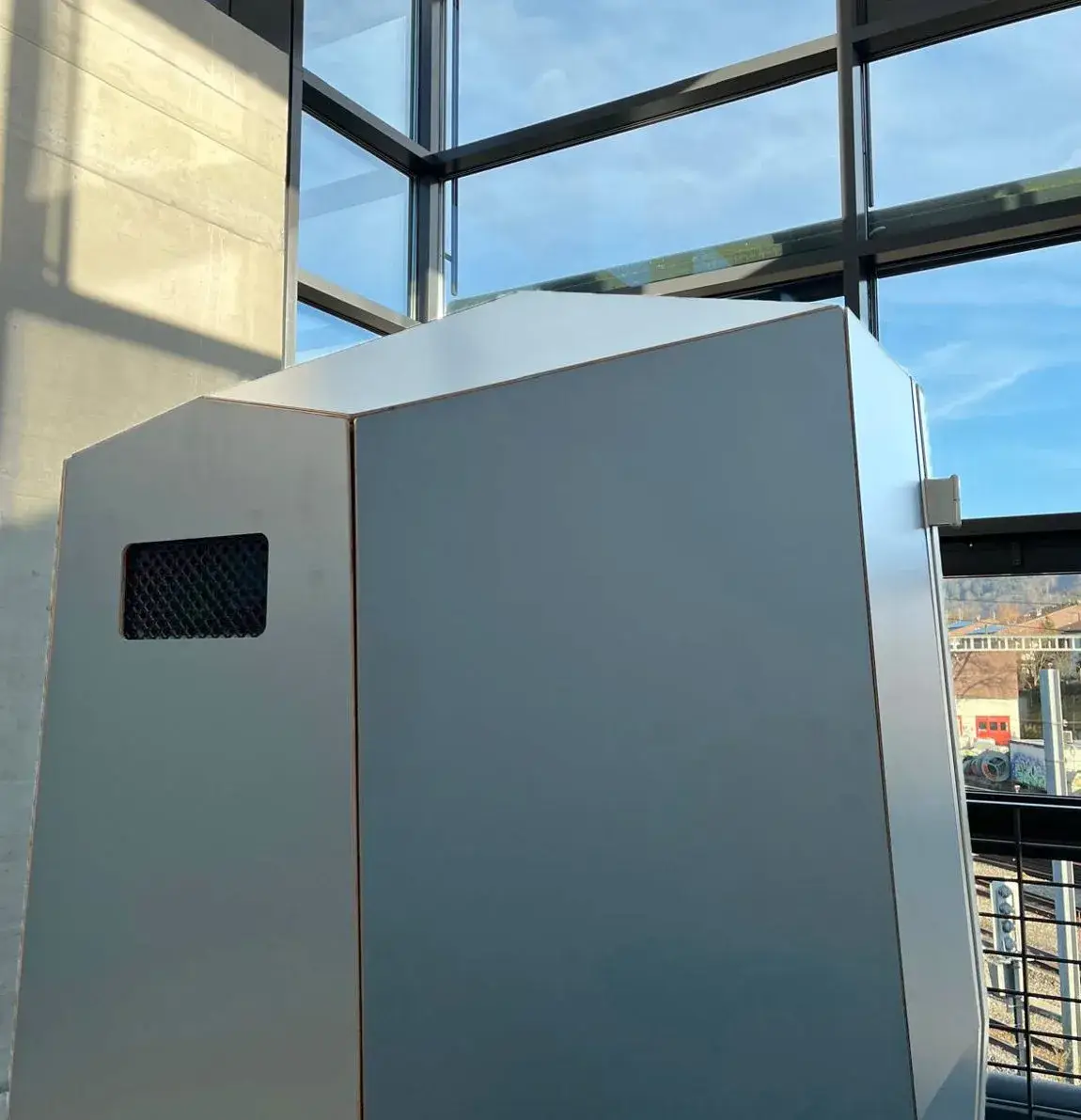
Swisscom’s headquarters is well-designed and comfortable- but lacked private spaces for individual restoration. Fifteen minutes of solitude restores focus, but finding it in modern offices is nearly impossible.
92%
of neurodiverse students report improved academic performance
→ Why Kabin
→ The Impact
→ Next Steps
The Exhaustion We Call Ambition
What was happening: Despite excellent facilities, many students were underperforming- not due to ability, but due to environmental incompatibility.
- Staff working in constant connectivity (meetings, calls, messages)
- No private spaces for cognitive restoration
- Mental exhaustion accumulating throughout day
- Afternoon productivity crashes
- Staff leaving building to find solitude
The Need: Charging Stations for Minds
The Science of Solitude: 15 minutes of solitude lowers stress & restores cognitive control. The brain’s default reflective and creative mode network only activates when you step away from external input. – University of Rochester
“Where do humans recharge when we treat exhaustion as ambition and call constant availability commitment?”
The Kabin Difference
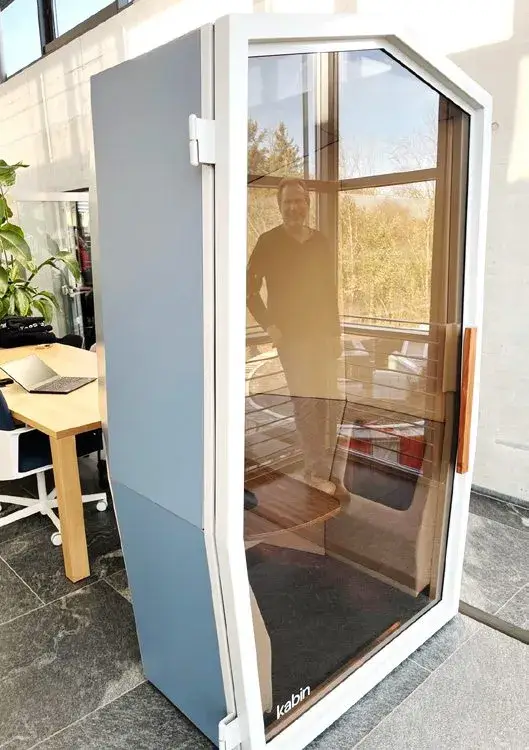
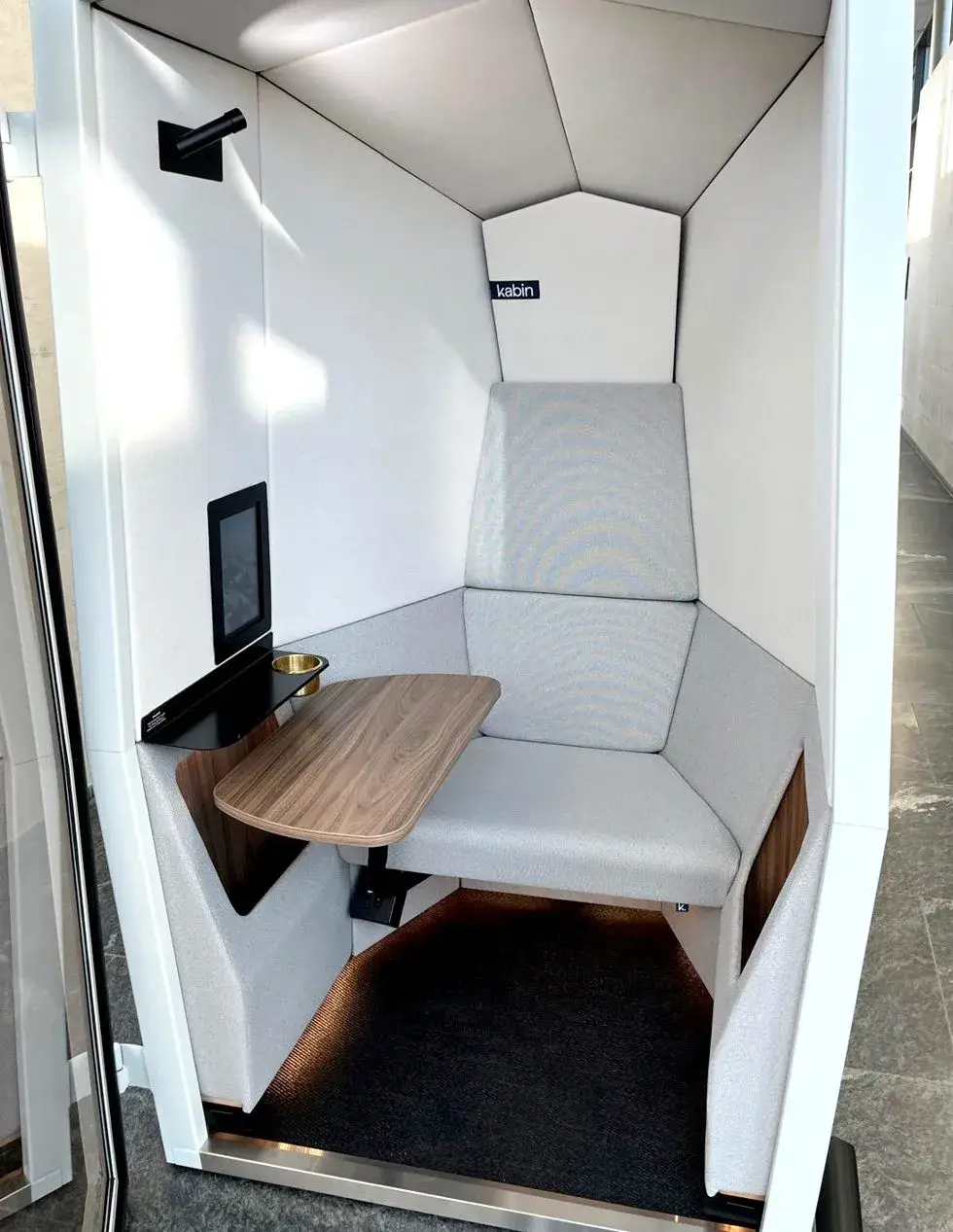
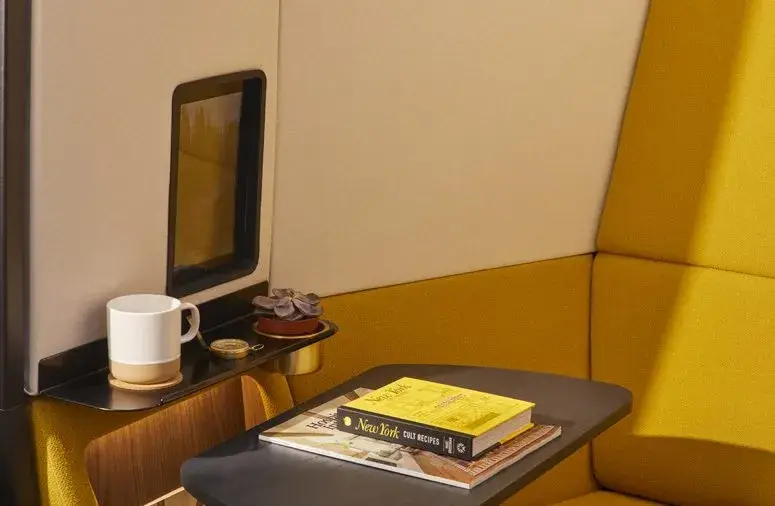
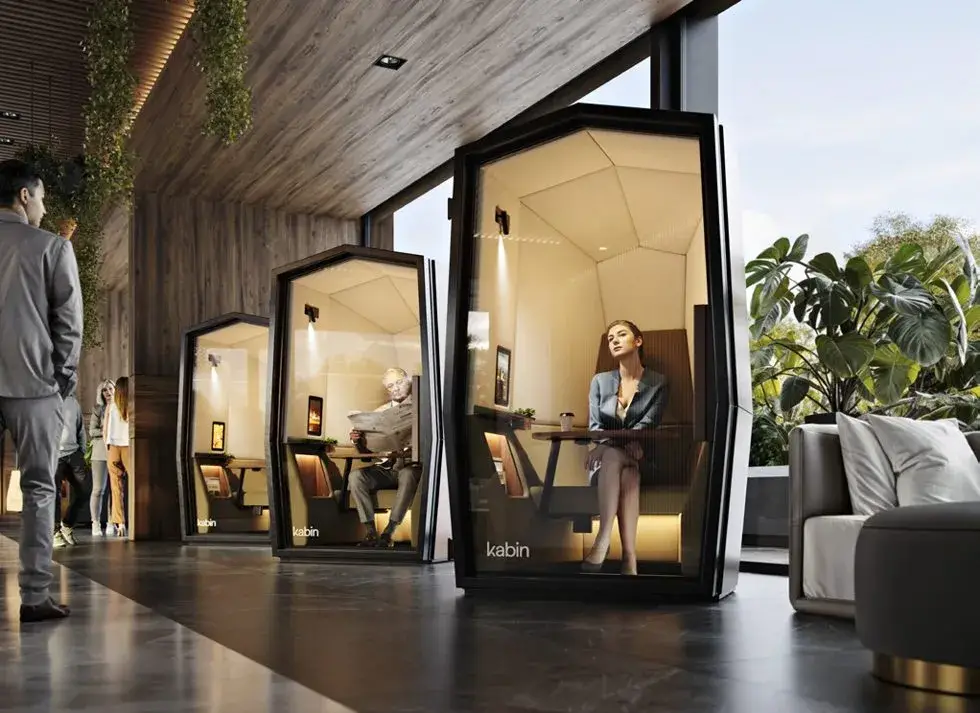
Genuine Solitude – Full enclosure creates true aloneness. Visual isolation. Space where brain’s default mode network can activate.
Individual Environmental Control – Adjust lighting to support restoration. Control ventilation and temperature.
Optimal Session Length – 15-30 minutes. Matches research on effective solitude duration.
Permission Structure – Organizational provision signals that solitude is legitimate. Using Kabin is performance strategy.
When we allow solitude, we don’t power down- we power up.
Measured and Felt
What changed:
The Complete Story
“I didn’t realize how distracted I was until I had a space to actually be alone. By afternoon I’m mentally drained even though I haven’t done any deep thinking. I’m just depleted from constant input. Before Kabin, I’d power through that exhaustion. By the time I got home I was completely spent. My partner noticed I was irritable. I was sleeping poorly.
Now I block 20 minutes after lunch to use a Kabin. I sit in quiet, adjust the lighting, and just breathe. No phone, no laptop, no input. There’s no agenda- I’m just alone.
When I come back to my desk, it’s like my brain has rebooted. I’m sharper, more patient, more creative. That 3pm crash? Doesn’t happen anymore. I’m also sleeping better. I’m not carrying accumulated stress home. My partner says I’m more present.
It’s not escaping work- it’s making the work sustainable. Fifteen minutes of solitude is the best performance tool I’ve found.”
– Staff Member, Swisscom Zurich
“Solitude stopped feeling like a luxury and started feeling like a necessity.”
The Expansion
Initial: Immediate adoption, consistently high utilization
Current: Considered essential infrastructure
Cultural Shift: Solitude destigmatized. Restoration is performance strategy.
The Reality
Just as we provide meeting rooms, desks, coffee, and wifi- we need solitude spaces for restoration.
“Kabin: performance sanctuary”
The Science Behind Solitude
- Intentional solitude lowers stress and restores cognitive control
- Default mode network activates during periods without external input
- Brief solitude periods reset cortisol levels
- Restoration improves focus, problem-solving, decision-making
Why Wellbeing-Focused Organizations Choose Kabin
- Science-based
- Preventative
- Performance-enhancing
- Destigmatizing
- Measurable impact
Does Your Workplace Support Human Restoration?
Do staff have access to genuine solitude during the workday?
Does your office support cognitive restoration, or just cognitive demand?
Do you provide charging stations for devices but not for minds?
Next Steps
Schedule a Consultation
Experience Kabin
Custom Design
Installation Planning
Timeline and placement strategy for your space
Where humansrecharge
The Challenge
Swisscom's headquarters is well-designed and comfortable- but lacked private spaces for individual restoration. Fifteen minutes of solitude restores focus, but finding it in modern offices is nearly impossible.
Why Kabin
The Impact
Next Steps
The Exhaustion We Call Ambition
What was happening: Despite excellent facilities, many students were underperforming- not due to ability, but due to environmental incompatibility.
- Staff working in constant connectivity (meetings, calls, messages)
- No private spaces for cognitive restoration
- Mental exhaustion accumulating throughout day
- Afternoon productivity crashes
- Staff leaving building to find solitude
The Need: Charging Stations for Minds
The Science of Solitude: 15 minutes of solitude lowers stress & restores cognitive control. The brain's default reflective and creative mode network only activates when you step away from external input. - University of Rochester
“Where do humans recharge when we treat exhaustion as ambition and call constant availability commitment?”
The Kabin Difference:
Genuine Solitude - Full enclosure creates true aloneness. Visual isolation. Space where brain's default mode network can activate.
Individual Environmental Control - Adjust lighting to support restoration. Control ventilation and temperature.
Optimal Session Length - 15-30 minutes. Matches research on effective solitude duration.
Permission Structure - Organizational provision signals that solitude is legitimate. Using Kabin is performance strategy.
When we allow solitude, we don't power down- we power up.
Measured and Felt
What changed:
The Complete Story
"I didn't realize how distracted I was until I had a space to actually be alone. By afternoon I'm mentally drained even though I haven't done any deep thinking. I'm just depleted from constant input. Before Kabin, I'd power through that exhaustion. By the time I got home I was completely spent. My partner noticed I was irritable. I was sleeping poorly.
Now I block 20 minutes after lunch to use a Kabin. I sit in quiet, adjust the lighting, and just breathe. No phone, no laptop, no input. There's no agenda- I'm just alone.
When I come back to my desk, it's like my brain has rebooted. I'm sharper, more patient, more creative. That 3pm crash? Doesn't happen anymore. I'm also sleeping better. I'm not carrying accumulated stress home. My partner says I'm more present.
It's not escaping work- it's making the work sustainable. Fifteen minutes of solitude is the best performance tool I've found."
- Staff Member, Swisscom Zurich
“Solitude stopped feeling like a luxury and started feeling like a necessity.”
The Expansion
Initial: Immediate adoption, consistently high utilization
Current: Considered essential infrastructure
Cultural Shift: Solitude destigmatized. Restoration is performance strategy.
The Reality
Just as we provide meeting rooms, desks, coffee, and wifi- we need solitude spaces for restoration.
The Science Behind Solitude
- Intentional solitude lowers stress and restores cognitive control
- Default mode network activates during periods without external input
- Brief solitude periods reset cortisol levels
- Restoration improves focus, problem-solving, decision-making
Why Wellbeing-Focused Organizations Choose Kabin
- Science-based
- Preventative
- Performance-enhancing
- Destigmatizing
- Measurable impact
Does Your Workplace Support Human Restoration?
Do staff have access to genuine solitude during the workday?
Does your office support cognitive restoration, or just cognitive demand?
Do you provide charging stations for devices but not for minds?